
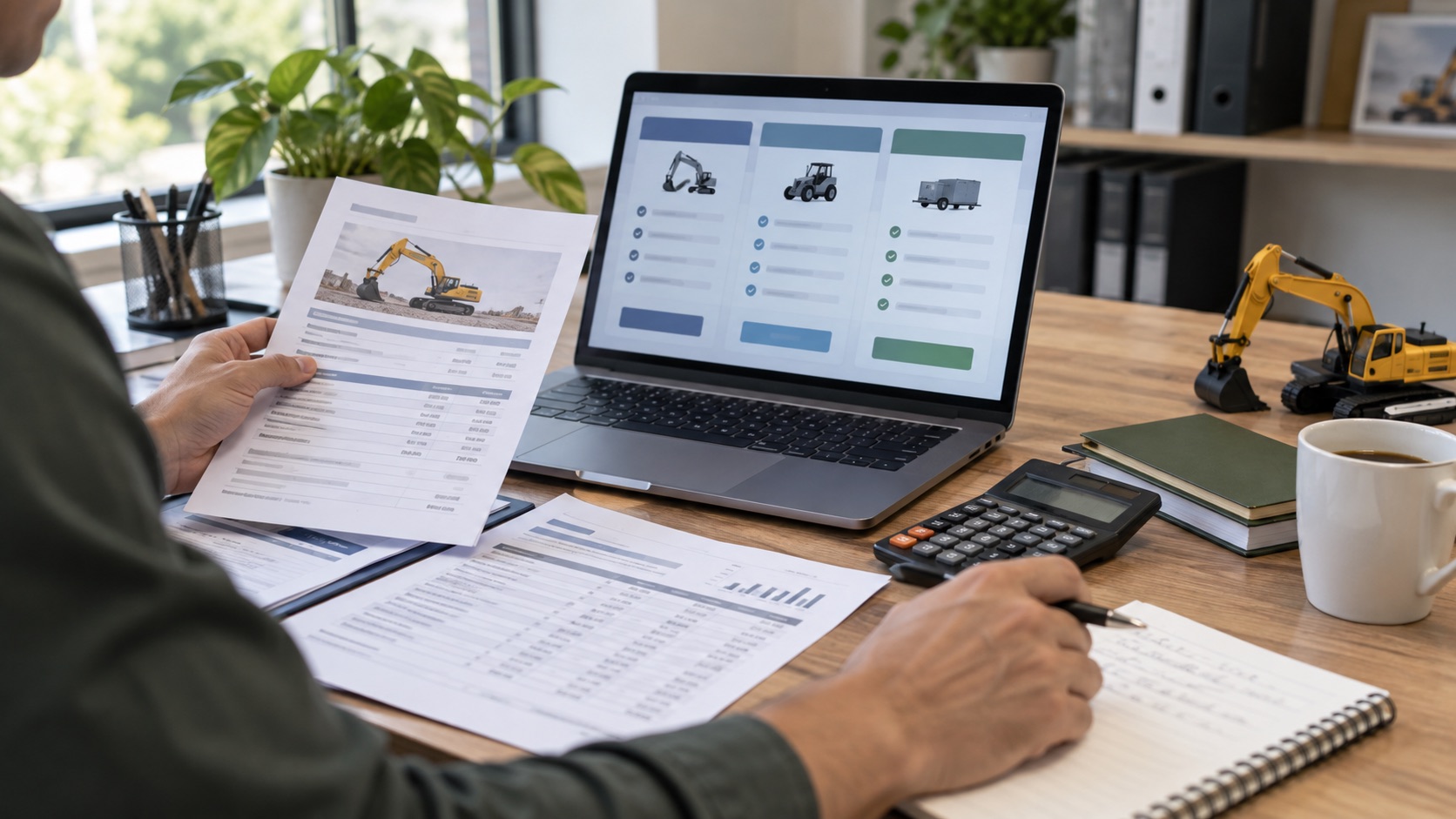
To finance equipment with bad credit, start by choosing a specific asset, proving how it will support repayment, preparing the quote and seller file, strengthening compensating factors, then comparing written offers by total cost and cash-flow fit. Bad credit does not automatically block equipment financing, but it usually makes the lender look harder at down payment, business deposits, equipment value, time in business, seller quality and whether the payment is affordable.
The safest goal is not simply "get approved." It is to get equipment the business can use while accepting a payment structure it can survive. A rushed approval with unclear fees, daily repayment, broad lien language or an unaffordable buyout can create more damage than waiting, increasing the down payment or choosing a less expensive asset.
What current results show
Current U.S. and Texas search results for this topic are commercial and late-stage informational. The strongest pages combine bad-credit lender lists, "how to qualify" sections, credit-score context, down-payment guidance, document checklists, tables of contents, calculators, FAQs and author or editorial review signals. The overlap with ranking pages is obvious, so this guide focuses on the process rather than another list of lender names.
NerdWallet's bad-credit equipment financing guide emphasizes organizing finances, strengthening the application and comparing multiple lenders. It also notes that bad-credit business loans can carry higher costs and shorter repayment terms, so affordability matters. Axiant Partners' bad-credit equipment financing page highlights factors beyond score, including equipment resale value, time in business, revenue, down payment and existing debt.
The "no credit check" angle needs caution. Merchant Maverick's no-credit-check equipment financing article says true no-credit-check equipment loans or leases are rare because lenders and lessors usually review credit even when the equipment secures the transaction. For credit-score context, myFICO explains that scores usually range from 300 to 850 and that each lender sets its own criteria. Official sources matter too: the SBA 7(a) program can support machinery and equipment through participating lenders, while the SBA 504 program can support qualifying long-term machinery and equipment with at least 10 years of useful remaining life.
Useful video overview
NerdWallet's equipment financing video is a helpful general primer before you compare written offers. Use it for product context, then rely on your actual lender quote for cost, payment and collateral terms.
How to finance equipment with bad credit
1. Pick the exact equipment before shopping lenders
A vague request is hard to underwrite. Before applying, define the asset, seller, price, condition, delivery timeline and business purpose. A lender can evaluate a 2024 skid steer from a dealer, a used box truck with a VIN, a dental imaging unit with an invoice or a commercial refrigerator package more clearly than a general request for "equipment money."
Collect the invoice, quote, bill of sale or auction listing. Include make, model, year, serial number or VIN, hours or mileage, condition, warranty, freight, installation, taxes, software and whether the seller can provide clean title or lien information. If the asset is used, the guide to used equipment financing explains why age, condition and seller documentation matter more.
2. Understand what credit problem the lender will see
"Bad credit" can mean several different things. A thin file, high utilization, a few late payments, a recent bankruptcy, tax liens, charge-offs and heavy current debt do not create the same underwriting story. Pull your reports early, check for errors and write a short explanation for any major blemish that has been resolved or is tied to a one-time event.
Do not overstate the situation. A lender may verify credit, bank activity and business information independently. The application is stronger when it is complete, consistent and honest. If credit is the main obstacle, link the explanation to current stability: better deposits, fewer debts, stronger down payment, signed work, replacement of rental costs or a piece of equipment that directly supports revenue.
3. Build compensating factors before submitting
Bad credit usually needs offsetting strengths. The most common compensating factors are a larger down payment, steady bank deposits, time in business, useful equipment, a reputable seller, additional collateral, co-borrower support, lower loan-to-value, signed contracts or clear industry experience. None guarantees approval, but each reduces what the lender has to assume.
The down payment question deserves care. More cash down can help approval and pricing, especially for older equipment or weaker credit, but draining the operating account can make the new payment harder to manage. Keep enough cash for insurance, delivery, setup, repairs, payroll and slow collections. For broader underwriting context, read equipment financing requirements before choosing a down-payment target.
4. Choose the lender channel that matches the file
Start with equipment-focused lenders or brokers when credit is challenged because they may understand collateral, vendor documents and industry-specific equipment better than a general unsecured lender. Dealer or vendor financing can be convenient when the seller has paperwork ready, but compare it against at least one outside quote. A local bank or credit union may be harder with damaged credit, yet useful if deposits, relationships and documentation are strong.
SBA-backed financing can belong in the comparison for prepared borrowers and planned purchases. It is not a shortcut around underwriting. The lender still reviews eligibility, creditworthiness, ability to repay and documentation. For urgent replacement equipment, a standard equipment finance offer may be faster; for a larger planned project, a 7(a) or 504 conversation may be worth starting early.
5. Apply with a complete file, not scattered fragments
Prepare the credit application, equipment quote, seller information, business bank statements, ownership details, entity information, owner ID, tax returns or financial statements if requested, insurance contact, current debt list and a short explanation of how the equipment supports repayment. A complete file reduces back-and-forth and lets lenders quote the same deal.
Equipments Finance can be one comparison point for business owners with a real equipment quote, especially when the file needs to be organized before lender review. The credit application is most useful when you already know the equipment, seller and approximate cash available at closing.
6. Compare the written offer, not the approval headline
Once offers arrive, normalize them. Compare amount financed, cash due at signing, payment amount, payment frequency, term, stated rate or cost basis, APR when available, fees, total repayment, collateral, personal guarantee, insurance requirements, lien scope, prepayment language and ownership outcome. If an offer uses a factor rate or daily repayment, translate it into total dollars and cash-flow impact before accepting.
For cost comparison, use the framework in equipment financing rates explained. A lower monthly payment can hide a longer term, higher fees or a required buyout. A faster approval can hide a payment frequency that does not match the business. The best offer is the one that fits the equipment's useful life and the company's realistic cash flow.
7. Keep tax and ownership questions separate from approval
Some borrowers choose financing partly because of tax planning, depreciation or ownership goals. Do not let a lender's sales language replace tax advice. IRS Publication 946 explains depreciation concepts, but how a loan, lease or equipment finance agreement affects one business depends on the contract and the tax facts.
Ask whether the agreement is a loan, lease, equipment finance agreement, rental purchase or working-capital product. Then ask who owns the equipment during and after the term, what the buyout is, whether there are return duties and how payoff works. The answer affects more than accounting; it affects resale, replacement and future borrowing flexibility.
Offer comparison checklist
| Item to compare | Why it matters with bad credit | Question to ask |
|---|---|---|
| Cash due at closing | More down can help approval, but too much can weaken operating cash. | What exact amount is due before the equipment is released? |
| Payment frequency | Daily or weekly payments can strain slow months faster than monthly payments. | Is repayment daily, weekly, monthly or seasonal? |
| Total repayment | Bad-credit offers may use fees or factor pricing that hides true cost. | How much will I pay if I make every payment on schedule? |
| Collateral and liens | A broad lien can limit future borrowing or equipment sales. | Does the lien cover only this equipment or broader business assets? |
| Prepayment rules | Some contracts do not discount much for early payoff. | What is the payoff amount after 6, 12 or 24 months? |
| Ownership outcome | Loan, lease and EFA structures can end differently. | Do I own the asset automatically, buy it, return it or renew? |
| Seller conditions | Private sellers, liens or missing documents can delay funding. | What seller documents must be cleared before closing? |
Red flags to avoid
Be careful with promises that every applicant will qualify, pressure to sign before seeing total repayment, vague lender identity, missing fee schedules, unclear buyout language, promises that credit will never be reviewed, and offers that do not identify whether the product is an equipment loan, lease or working-capital advance. Also avoid submitting many unfocused applications if the broker or marketplace cannot explain where the file is going.
Another red flag is a payment that only works in the best month. Bad-credit financing is often more expensive, so stress-test the payment against a slower month, delayed delivery, repair surprise or lower-than-expected revenue ramp. If the equipment cannot reasonably create, save or protect enough cash to support the payment, consider a smaller asset, repair, rental, larger down payment or delayed purchase.
Finally, do not let approval erase common sense. The equipment still needs to be insurable, usable, titled when applicable, delivered on time and matched to the business plan. Financing solves only the acquisition problem. The business still has to operate the asset after closing.
FAQ
Can I finance equipment with bad credit?
Some business owners can qualify for equipment financing with damaged credit, but approval is not guaranteed. Lenders usually review the equipment, down payment, revenue, bank activity, time in business, credit history and seller documentation.
How can I improve my chances before applying?
Organize the equipment quote, bank statements, ownership details and seller file; reduce avoidable credit issues where possible; offer a realistic down payment; and explain how the equipment will support repayment.
Is no-credit-check equipment financing realistic?
True no-credit-check equipment financing is uncommon. Many lenders use at least a soft or hard credit review because collateral recovery is costly and equipment values can depreciate.
Does a larger down payment help with bad credit?
Often, yes. A larger down payment can reduce lender exposure and may improve approval odds or terms, but it should not drain the cash needed to insure, install, operate and maintain the equipment.
Should I use an SBA loan for bad-credit equipment financing?
An SBA-backed path can work for eligible, prepared borrowers, but it is not an instant fix for bad credit. SBA lenders still review creditworthiness, ability to repay, eligibility and documentation.