
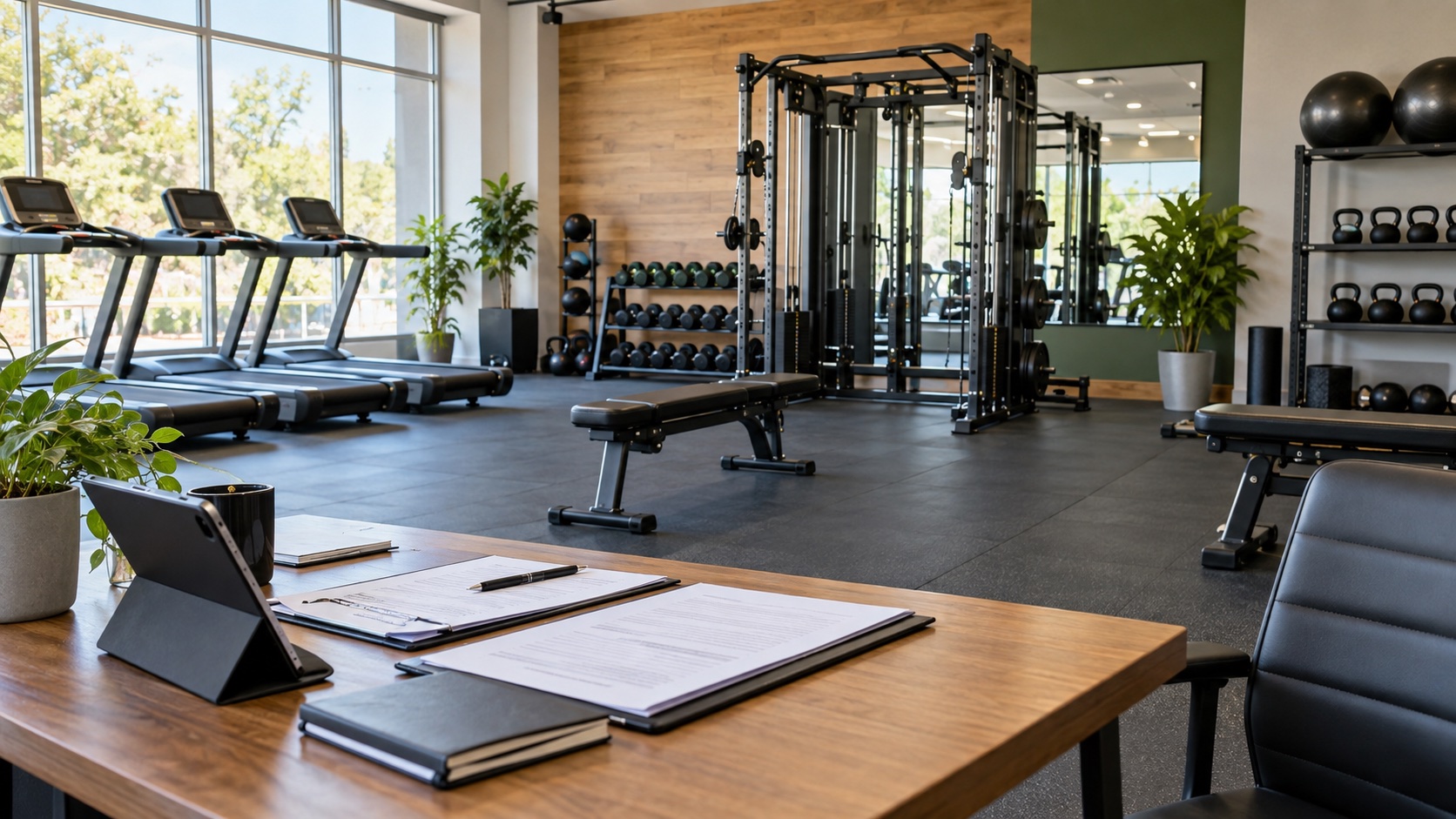
The best gym equipment financing option is the one that fits the fitness concept, equipment package, revenue stage, useful life, soft costs and ownership goal. A boutique strength studio buying racks and dumbbells, a franchise gym replacing cardio machines, a Pilates studio ordering reformers, and a startup fitness center building out its first floor may all need different structures. Start by comparing seven routes: equipment financing, a bank or credit union loan, vendor or manufacturer financing, SBA-backed financing, a marketplace or broker, leasing, and a working-capital line for non-equipment timing gaps.
Gym equipment purchases are rarely just machines. The invoice may include treadmills, ellipticals, bikes, rowers, selectorized strength machines, racks, benches, plates, flooring, mirrors, delivery, assembly, technology screens, access-control hardware and service plans. A financing offer that covers the machines but ignores freight, installation, taxes, opening payroll or pre-sale marketing can still leave the owner undercapitalized.
What current results cover
Current U.S. and Texas search results for gym equipment financing are strongly commercial. The leading pages include lender shortlists, industry landing pages, qualification notes, loan-versus-lease explanations, equipment examples and FAQs. NerdWallet's gym equipment financing guide uses an author/editor review format and compares lender categories by amount, time in business, interest-rate disclosure and term length. That matches the searcher's decision stage: most readers are not asking what a treadmill is; they are deciding which financing path is realistic.
Lender pages add useful underwriting clues. National Funding's gym and fitness equipment page discusses financing or leasing new and pre-owned fitness equipment, as well as working capital for rent, payroll and marketing. Ameris Bank Equipment Finance, another current SERP result, emphasizes application-only programs, revenue and credit thresholds, and equipment such as ellipticals, exercise bikes and treadmills. Those pages are promotional, but they show what lenders ask gym owners to organize before applying.
Official sources provide the guardrails. The SBA 7(a) page lists machinery and equipment, working capital, furniture, fixtures and supplies among possible uses when program and lender requirements are met. SBA 504 can be relevant for larger fixed-asset projects, but it is more restrictive and not designed for working capital. For tax treatment, IRS Publication 946 explains depreciation rules for business property; gym owners should ask a qualified tax professional how a specific loan, lease or equipment package should be treated.
Best gym equipment financing options
| Option | Best fit | What to check before signing |
|---|---|---|
| Equipment finance company | Defined treadmills, bikes, rowers, strength machines, racks, flooring-adjacent equipment or recovery tools with clear seller quotes. | Eligible soft costs, down payment, payment frequency, lien language, payoff terms, insurance requirements and total repayment. |
| Bank or credit union loan | Established gyms with organized financials, deposit history, stable memberships and planned replacement or expansion purchases. | Collateral scope, blanket liens, underwriting timeline, covenants, personal guarantee and whether the term fits equipment life. |
| Vendor or manufacturer financing | New equipment packages from a commercial fitness vendor that can coordinate quote, delivery, warranty and installation. | Cash price versus financed price, promotion terms, service plan, delivery, setup, taxes and end-of-term language. |
| SBA-backed financing | Larger buildouts or expansion projects that include equipment, fixtures, leasehold improvements and working capital. | 7(a) versus 504 fit, eligibility, borrower contribution, fees, documentation, closing timeline and allowed use of proceeds. |
| Marketplace or broker | Owners comparing multiple lender types, startup gyms, mixed-credit files or packages with equipment plus opening costs. | Actual lender identity, product type, broker compensation, credit-pull timing, repayment cadence and total cost. |
| Lease | Cardio, technology-heavy equipment or studio packages where upgrade flexibility matters more than long-term ownership. | Purchase option, renewal rules, return condition, maintenance duties, insurance, taxes and upgrade rights. |
| Line of credit or working-capital loan | Rent, payroll, marketing, repairs, deposits and member-acquisition timing gaps around the equipment purchase. | Draw fees, repayment frequency, renewal risk, security interest and whether it solves cash timing rather than equipment ownership. |
1. Equipment finance company
An equipment finance company can be a practical first stop when the purchase is tied to specific commercial fitness assets. This may include treadmills, ellipticals, stationary bikes, rowers, stair climbers, cable machines, squat racks, benches, dumbbell sets, selectorized machines, recovery chairs, sauna or cold-plunge equipment, access-control hardware and other gym-floor assets. The lender reviews the asset, vendor, price, business use, age, condition and repayment ability.
This route is strongest when the owner has a concrete package: itemized quote, vendor contact, delivery timing, warranty details, equipment list, down payment requirement and a short explanation of how the equipment supports member revenue. Equipments Finance is based in Garland, Texas and can be one comparison point for owners reviewing commercial gym purchases alongside broader startup equipment financing and established equipment-lender options. That is a factual company mention, not a promise of approval, pricing or terms.
2. Bank or credit union loan
A bank or credit union may fit gyms with operating history, organized bookkeeping, predictable member drafts and enough time for conventional underwriting. A bank can be useful when the project is larger than a single equipment quote or when the owner wants one relationship for deposits, merchant services, real estate, equipment and working capital.
The tradeoff is process. Banks may ask for tax returns, interim financials, bank statements, membership revenue, debt schedules, entity documents, landlord or lease information and collateral details. Ask whether the lender understands fitness cash flow. Membership revenue can be strong but still uneven around opening, local competition, cancellation waves, seasonality and marketing cycles. If the bank wants broad collateral, compare that against a narrower equipment-backed structure before signing.
3. Vendor or manufacturer financing
Vendor financing can be convenient because the equipment quote, delivery, installation and financing conversation happen in one place. It can work well for commercial cardio packages, strength circuits, Pilates reformers, recovery rooms, access-control hardware and studio buildouts where the vendor has an established financing partner.
Convenience still needs a side-by-side comparison. Ask for the cash price, financed price, term, fees, payment start date, warranty, service plan, delivery, assembly, taxes and any promotional conditions. A low advertised monthly payment may depend on credit profile, purchase amount, term length or a future buyout. For used equipment, compare a broader used equipment financing path because age, condition, service records and remaining useful life can change underwriting.
4. SBA-backed financing
SBA-backed financing can be worth exploring when gym equipment is part of a larger planned project. A 7(a) loan may fit an eligible business purpose that includes equipment, fixtures, supplies, working capital, leasehold improvements or acquisition costs. A 504 loan may be relevant for major fixed assets, but it generally has a narrower use case and should be discussed with a participating lender or Certified Development Company.
The limitation is timing and paperwork. SBA financing can involve eligibility review, ownership information, business plan details, financial projections, collateral review and closing documents. That can be a sensible tradeoff for a full gym opening, second location or major expansion. It is usually less practical for a single urgent treadmill replacement or a small refresh that needs quick delivery before a membership campaign.
5. Marketplace or broker
A marketplace or broker can help when the owner is unsure which lender category fits. Gym files vary widely. One business may have strong member drafts but limited collateral. Another may be pre-opening with a signed lease, owner experience and a large equipment quote. A franchisee may have a predictable model but a large upfront package. A comparison process can surface equipment lenders, term-loan providers, lease options or SBA lenders that would be hard to identify one by one.
After receiving offers, identify the actual lender and product. Confirm whether the offer is an equipment finance agreement, lease, term loan, line of credit, sales-based product or brokered offer. Payment frequency, prepayment rules, broker compensation, collateral, personal guarantee and total repayment matter as much as headline approval. For a broader preparation view, read what lenders look for in equipment deals.
6. Lease
Leasing can fit cardio and technology-heavy gym equipment because member expectations change and machines can become dated before they physically fail. A lease may also fit boutique studios testing a concept, locations with uncertain capacity, or operators who want regular upgrade options rather than long-term ownership.
Review the purchase option, renewal rules, return duties, maintenance obligations, insurance, taxes and whether the lease has automatic extensions. A lease can be useful, but it is not automatically cheaper than a loan. For ownership tradeoffs, compare equipment loan vs equipment lease before choosing the structure.
7. Line of credit or working-capital loan
Sometimes the equipment is not the only funding need. A gym may need rent deposits, payroll before launch, marketing, software, cleaning supplies, repairs, signage, working cash and membership-sales runway. A line of credit or short-term working-capital loan can help with timing gaps, but it should not be confused with long-term equipment ownership financing.
Use working capital for short-lived needs. Use equipment financing for durable assets when the repayment term matches the asset's useful life. If a lender proposes a very short repayment schedule for equipment that should serve the gym for years, compare monthly cash impact carefully. The goal is not simply getting funded. The goal is keeping the gym stable while the equipment produces member value.
How to match financing to gym cash flow
Start with the revenue stage. A pre-opening gym has projections, deposits and founder capital, but not a full operating history. An established studio replacing worn bikes has member revenue, retention data and past utilization. A full-service gym adding recovery equipment may need to prove that the new service will raise memberships, premium fees or retention enough to justify the payment.
Next, separate equipment from buildout. Machines, racks and benches are different from flooring, mirrors, HVAC, plumbing, showers, lockers, access software, signage and marketing. Some lenders can include delivery, installation, taxes and freight when those costs are tied to the equipment package. Others focus on hard equipment value. Put the total project into one budget, but ask each lender exactly which costs are eligible.
Then match term to useful life. Commercial cardio equipment may need more frequent refreshes than racks, dumbbells or benches. Technology screens, connected consoles and access-control systems may become obsolete faster than steel strength equipment. A long term can lower monthly payment, but it may be risky if the gym expects to upgrade sooner. A short term can reduce total interest but strain cash during ramp-up.
Finally, test the payment against conservative member revenue. Do not use the best month or the founder's target membership count as the only test. Include cancellations, maintenance, rent, payroll, insurance, payment processing, cleaning, utilities, software and marketing. If the gym is new, keep a reserve for the gap between opening day and a stable membership base. The right financing choice should survive a slower start.
Documents to prepare before applying
Prepare the equipment quote, vendor contact, equipment list, model information, new or used status, delivery date, installation requirements, down payment requirement, warranty or service agreement, photos for used equipment and any software or hardware subscriptions tied to the package. If the equipment is used, ask for service records, age, condition and proof that the seller can transfer clear title.
The business side matters just as much. Lenders may request ownership information, tax ID, business bank statements, tax returns or financials, membership revenue history, presale deposits, lease or location details, franchise documents, business plan, insurance information and a short explanation of how the equipment supports repayment. If the gym is pre-opening, show the opening budget, owner capital, lease terms, marketing plan and realistic membership assumptions.
Before signing, compare written offers in one table. Include amount financed, cash due upfront, term, payment frequency, fees, eligible costs, collateral, personal guarantee, prepayment or buyout language, total repayment and funding timeline. When the quote is ready, the credit application gives gym owners a starting point for an equipment review.
FAQ
What is the best gym equipment financing option?
The best option depends on the gym concept, equipment type, business history, revenue, down payment, useful life and ownership goal. Most owners should compare equipment financing, vendor financing, bank loans, SBA-backed paths, marketplaces and leasing before signing.
Can a startup gym finance equipment?
Sometimes. Startup gyms may face narrower lender choices, larger down payment expectations or more documentation. A signed lease, detailed equipment quote, founder experience, realistic projections, presale evidence and cash reserves can help the conversation.
Can financing include installation, freight and taxes?
Sometimes. Some lenders include soft costs tied to the equipment package, such as delivery, installation, taxes and freight. Others finance only the equipment itself. Ask each lender to identify eligible and excluded costs in writing.
Is leasing better than buying commercial fitness equipment?
Leasing can help when upgrade flexibility matters, especially for cardio or technology-heavy equipment. Buying can fit durable strength equipment the gym expects to keep. Compare total cost, maintenance, end-of-term rules and tax treatment before deciding.
How much should a gym finance at once?
Finance only the package the gym can support through conservative cash flow. Leave room for rent, payroll, marketing, repairs, insurance, cleaning, software and member-acquisition ramp. A smaller first phase can be safer than a large package that assumes immediate full utilization.