
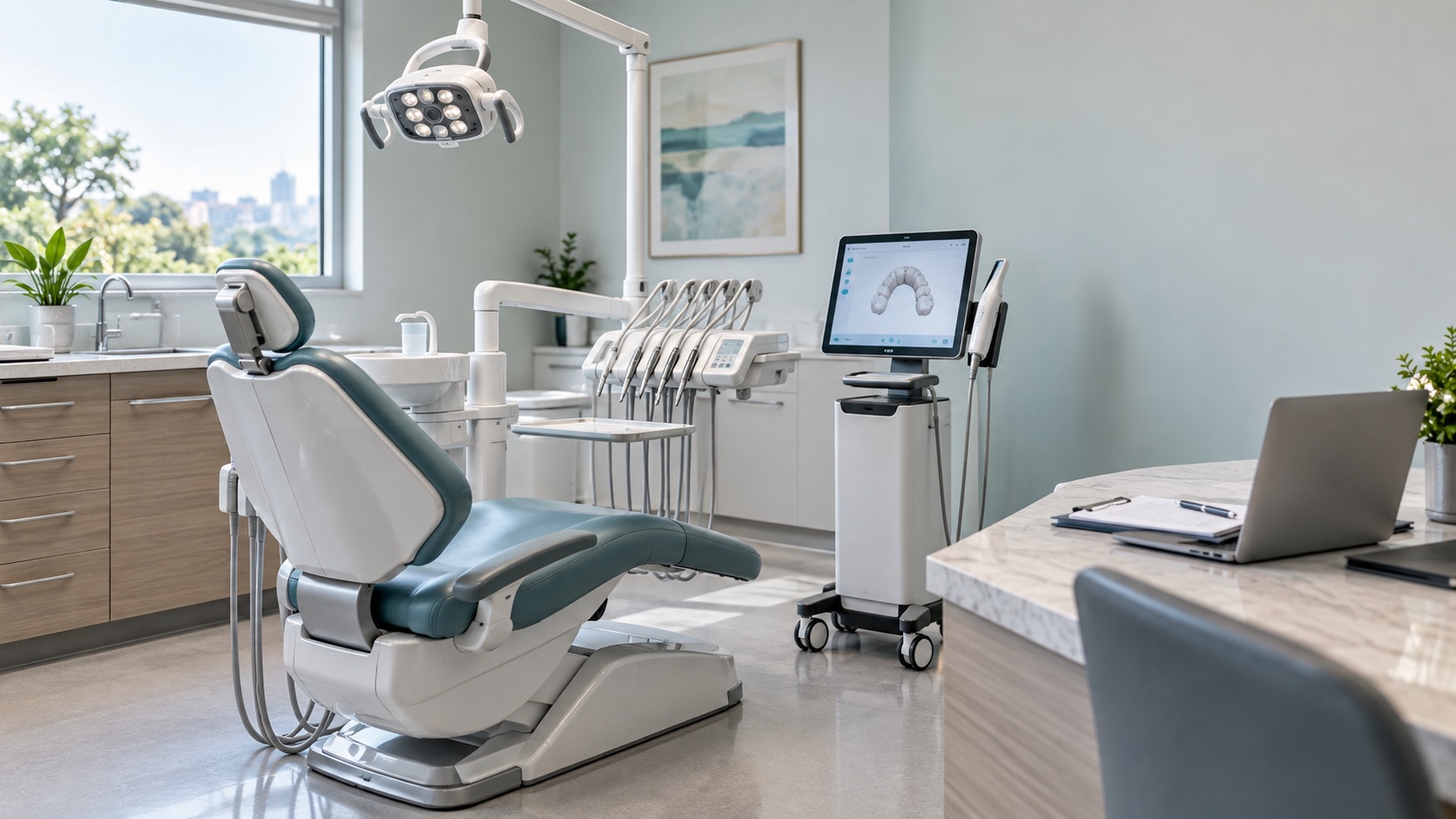
The best dental equipment financing option is the one that fits the equipment package, vendor timing, useful life, ownership goal and practice cash flow. A solo dentist adding one chair, a startup practice building several operatories, an established office buying CBCT imaging, and a group practice adding CAD/CAM may all need different structures. Start by comparing seven routes: an equipment finance company, bank or practice lender, dental vendor program, SBA-backed lender, marketplace or broker, lease, and a broader practice loan when equipment is only one part of the project.
Dental equipment purchases are rarely just one invoice. A package can include chairs, delivery units, lights, compressors, vacuum systems, sterilizers, handpieces, sensors, imaging, intraoral scanners, milling units, cabinetry, IT, installation, training, service plans and software. Some lenders can include many of those related costs. Others focus on the hard equipment value and expect the practice to cover build-out, working capital or software separately.
What current results cover
Current U.S. results for dental equipment financing mix dental-practice lender pages, vendor finance pages and broader equipment-loan comparisons. Strong pages usually include a direct answer, lender or product table, loan-versus-lease discussion, eligibility notes, Section 179 or depreciation caveats, FAQs and a practical list of documents. The better results understand that dental imaging, operatory packages and general office equipment do not have the same risk profile.
Practice-lending pages tend to emphasize acquisition, expansion, startup and equipment needs. Bank of America's dental practice loan page positions practice financing around starting, expanding, buying or renovating a dental practice and buying equipment. Vendor pages add equipment-specific context: Henry Schein Financial Services describes financing support for dental equipment, technology and practice needs through lender relationships.
Official sources shape the longer decision. The SBA 7(a) program page explains that SBA-guaranteed loans are made through lenders and can support general business purposes for eligible borrowers. The SBA 504 page notes long-term machinery and equipment as a possible use when program requirements are met. For tax treatment, IRS Publication 946 explains depreciation rules for business property; a dentist should still ask a tax professional how a specific loan, lease or equipment package should be handled.
Best dental equipment financing options
| Option | Best fit | What to check before signing |
|---|---|---|
| Equipment finance company | Defined chairs, imaging, scanners, sterilization, compressors or operatory packages with clear quotes and business use. | Eligible soft costs, down payment, payment start date, lien language, payoff terms, total repayment and whether installation can be included. |
| Bank or practice lender | Established dental practices, practice acquisitions, expansions, renovations or multi-part projects that include equipment. | Collateral scope, practice financials, owner guarantee, closing timeline, covenants, working-capital treatment and whether equipment is separated from build-out. |
| Dental vendor financing | New equipment bought through a supplier that can coordinate quote, delivery, training, warranty and lender introductions. | Cash price versus financed price, service plans, software subscriptions, delivery conditions, installation responsibilities and end-of-term terms. |
| SBA-backed financing | Larger planned purchases, startup build-outs or expansion projects where the borrower can support a fuller documentation process. | 7(a) versus 504 fit, eligibility, useful life, borrower contribution, collateral, fees, timeline and lender experience with dental practices. |
| Marketplace or broker | Practices comparing lender types, newer offices, mixed-credit files or packages with several vendors and cost categories. | Final lender identity, product type, broker compensation, hard-credit timing, payment cadence, total repayment and prepayment language. |
| Lease | Technology-heavy assets, upgrade cycles or practices that want flexibility around ownership at the end of the term. | Purchase option, renewal rules, return duties, maintenance, taxes, insurance, software ownership and accounting advice. |
| Practice loan plus equipment financing | Projects that combine equipment with leasehold improvements, marketing, payroll, supplies or acquisition costs. | Which costs belong in each facility, whether payments overlap, lien priority, cash reserve after closing and total debt service. |
1. Equipment finance company
An equipment finance company can be a practical first stop when the purchase is tied to a specific dental asset or package. This can fit dental chairs, delivery systems, lights, compressors, vacuum pumps, autoclaves, sensors, cone-beam imaging, intraoral scanners, milling units, handpieces and operatory technology. The lender reviews the equipment, vendor, cost, business use, practice profile and repayment ability.
This route is strongest when the file is concrete: itemized vendor quote, equipment descriptions, model numbers, installation date, software or warranty details and a clear explanation of how the equipment supports production or patient flow. Equipments Finance is based in Garland, Texas and can be one comparison point for owners reviewing dental equipment alongside broader medical equipment financing, office equipment financing or other commercial equipment categories. That is a factual company mention, not a guarantee of approval, pricing or terms.
2. Bank or practice lender
A bank or practice lender may fit established dentists with organized financials, steady collections and enough time for conventional underwriting. This path can also make sense when the equipment is part of a larger project: adding operatories, renovating a suite, buying a practice, opening a second location or refinancing existing practice debt. A practice lender may understand production reports, procedure mix, insurance reimbursement timing and associate-doctor staffing better than a generalist.
The tradeoff is documentation and scope. A bank may ask for tax returns, interim financials, bank statements, debt schedule, production reports, lease information, purchase agreements, projections and details about existing liens. If the lender wants broad collateral, confirm exactly what is pledged. If the offer combines equipment, working capital and build-out into one facility, compare it against a separate equipment structure so the term and payment match the assets.
3. Dental vendor financing
Vendor financing can reduce coordination work because the equipment quote, installation, training, warranty and financing conversation are connected. This can be useful for chair packages, digital imaging, CAD/CAM, sterilization, software-enabled systems and full operatory setups where the supplier understands delivery and installation timing. A vendor partner may also be familiar with the documents lenders want for that equipment category.
Convenience still needs comparison. Ask for the cash price, financed price, payment start date, deposit, freight, installation, warranty, support agreement, software subscription and cancellation rules. A vendor promotion can be useful, but it should not hide total repayment, fees or end-of-term language. For used or refurbished equipment, compare a broader used equipment financing path because age, condition, seller documentation and remaining useful life can change underwriting.
4. SBA-backed financing
SBA-backed financing can be worth exploring for larger dental projects when the borrower qualifies and the timeline allows more paperwork. A 7(a) loan may fit a broader practice purpose, such as equipment plus working capital, acquisition support or expansion. A 504 loan may be relevant for long-term fixed assets when the project meets program requirements and the machinery or equipment has a long enough useful life.
The main limitation is speed and process. SBA financing is handled through participating lenders and may require eligibility review, business financials, ownership details, collateral review, projections and closing documents. It can be a strong planning route for a startup build-out or major expansion. It is usually less practical when a compressor fails and the practice needs a replacement funded quickly.
5. Marketplace or broker
A marketplace or broker can help when the right route is not obvious. Dental files vary widely: a startup dentist with strong clinical experience, an established office replacing imaging, a practice expanding hygiene capacity, a multi-vendor build-out, or an owner with strong revenue but complicated personal credit. A comparison process may surface equipment lenders, practice lenders and lease programs that the practice would not find alone.
After receiving offers, identify the actual lender and product. Confirm whether the offer is an equipment finance agreement, lease, term loan, SBA-backed loan, line of credit, revenue-based product or something else. Payment frequency, prepayment rules, broker compensation, personal guarantee language and total repayment matter as much as the headline approval. For a broader underwriting view, read what lenders look for in equipment deals.
6. Lease
Leasing can fit dental technology that may be upgraded before long-term ownership feels certain. Digital imaging, scanning, milling and some software-enabled systems can change faster than chairs or cabinetry. A lease may also help a practice align payments with expected use while preserving cash for staffing, supplies and patient acquisition.
The end-of-term language is the critical part. Review the purchase option, renewal rules, return conditions, maintenance duties, insurance, taxes, software rights and service obligations. A low payment can become expensive if the practice misses notice deadlines or does not understand the buyout. For ownership tradeoffs, compare equipment loan vs equipment lease before choosing this route.
7. Practice loan plus equipment financing
Some dental projects are too broad for a single equipment-only discussion. A startup or expansion may include chairs, imaging, cabinetry, plumbing, electrical, leasehold improvements, signage, marketing, supplies, payroll and working capital. Putting every cost into one facility can be convenient, but it may not give each asset the right term or collateral treatment.
A blended structure can be cleaner. The practice might use equipment financing for chairs, imaging and hard equipment while using a practice loan or line of credit for build-out, staffing and early working capital. The point is not to collect more debt products. The point is to keep repayment timing aligned with what each cost actually does for the practice. If the project includes vehicles or delivery assets, compare commercial vehicle financing separately.
How to match financing to the equipment
Start with the equipment's role in the practice. A replacement sterilizer that protects daily production has a different business case than a new CAD/CAM system that depends on procedure volume and staff training. A CBCT unit may support new services, referrals or case acceptance, but only if the practice has the clinical workflow, demand and compliance process to use it well. The financing term should match when the equipment starts contributing to cash flow.
Next, separate hard costs and soft costs. The chair or imaging unit may be the core asset, but delivery, installation, cabinetry, IT, training, warranty, service plans and software can be meaningful. Some costs may be eligible with the equipment. Others may need a separate working-capital or practice-loan conversation. If soft costs are material, do not compare offers only by monthly payment; compare what each offer actually funds.
Then look at useful life and upgrade risk. Dental chairs, compressors and sterilization equipment may have different useful lives than software-enabled scanners or imaging technology. A longer term can lower the payment, but it can also create a mismatch if the practice wants to upgrade sooner. Used or refurbished equipment can reduce purchase price, but it may require stronger condition documents, serial numbers, seller information and maintenance records.
Finally, compare the complete payment stack. Rent, build-out debt, practice acquisition debt, payroll, lab costs, supplies, merchant fees and insurance all compete with the equipment payment. The right approval is the one the practice can live with after a slow month, not just the one that funds the equipment today.
Documents to prepare before applying
Prepare itemized quotes, vendor contact information, equipment descriptions, model numbers, delivery schedule, installation date, deposit requirement, warranty, service plan, software subscription details and expected placed-in-service date. If the purchase is used, add photos, serial numbers, condition notes, maintenance records, seller ownership details and lien information when available.
The business side matters just as much. Lenders may request ownership information, tax ID, bank statements, tax returns, practice financial statements, production reports, debt schedule, lease information, purchase agreements, insurance details or projections. A short equipment memo can help: explain whether the purchase replaces downtime, adds operatory capacity, improves imaging, brings lab work in-house, supports new services or improves patient throughput.
Before signing, compare written offers in one table. Include amount financed, cash due upfront, term, payment frequency, fees, eligible costs, installation treatment, collateral, personal guarantee, buyout or payoff language, renewal language, total repayment and timing. When the quotes are ready, the credit application gives practice owners a starting point for a dental equipment review.
FAQ
What is the best dental equipment financing option?
The best option depends on the equipment, practice stage, cash flow, useful life, vendor timing and ownership goal. Most practices should compare equipment financing, bank or practice loans, vendor programs, SBA-backed financing, marketplaces and leasing before signing.
Can dental chairs, imaging and CAD/CAM systems be financed?
Often, yes. Dental chairs, delivery systems, compressors, sterilizers, cone-beam imaging, intraoral scanners, milling units and practice technology may be financeable when the quote, vendor, asset description and business use are clear.
Can financing include installation or software?
Sometimes. Some lenders can include related costs such as delivery, installation, training, warranties, software or cabinetry. Others prefer to finance only hard equipment value, so practices should separate hard costs and soft costs before comparing offers.
Is SBA financing useful for dental equipment?
SBA-backed financing can be useful for larger planned projects when the practice qualifies and can handle the documentation and timeline. It is usually less practical for an urgent single-chair replacement that needs quick funding.
What documents should a dentist prepare before applying?
Prepare itemized vendor quotes, equipment descriptions, delivery and installation timing, practice financials, ownership information, bank statements, tax returns if requested and a short explanation of how the equipment supports production and repayment.