
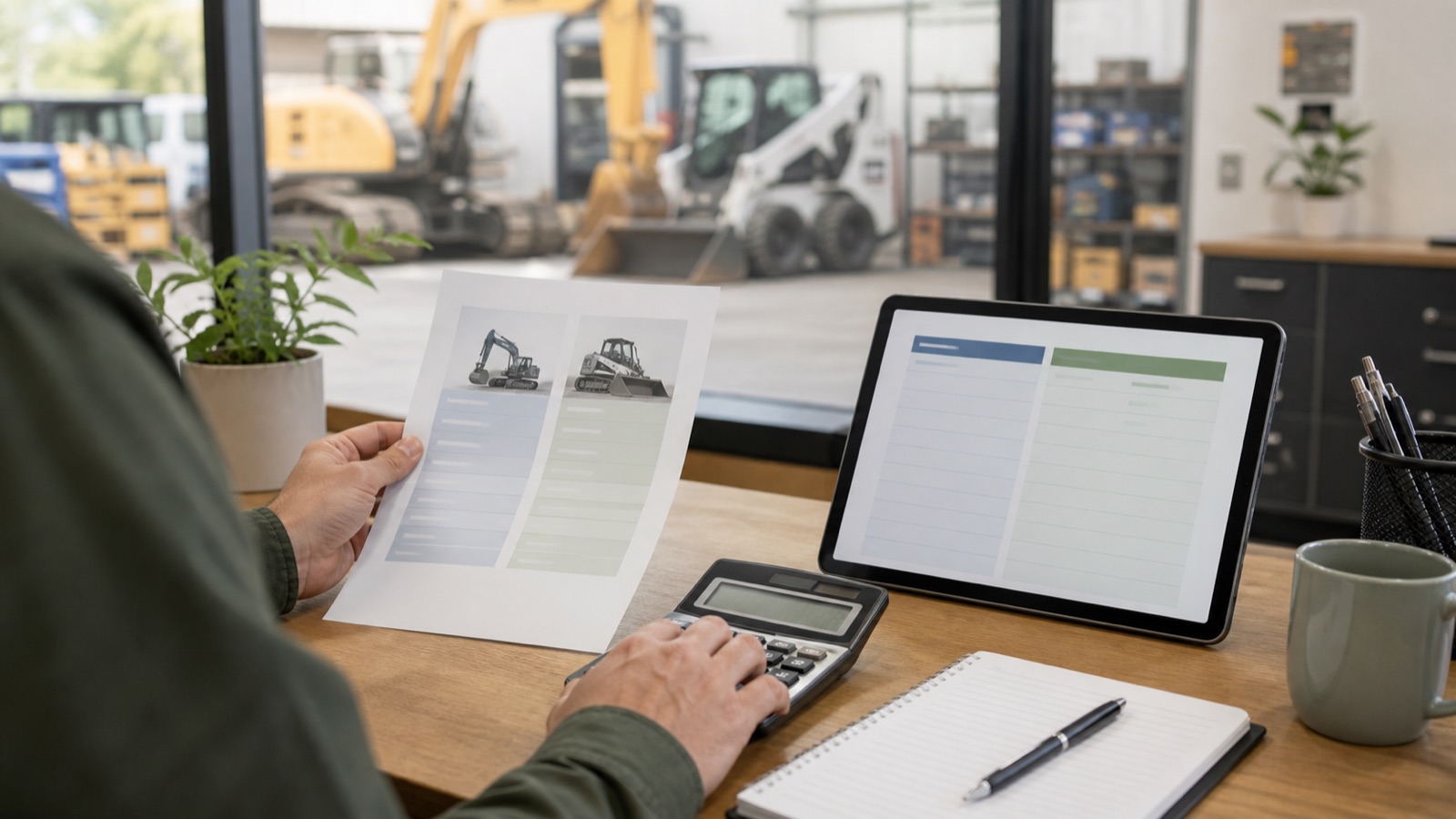
Equipment financing usually fits best when your business is buying one specific piece of equipment, the seller can provide a clear quote or invoice, and the equipment itself can support the financing as collateral. A general business loan usually fits best when the money needs to cover more than the equipment, such as installation, inventory, payroll, marketing, renovations, software, training or a cash-flow buffer. The practical answer is not "which loan is best?" but "which structure matches the job the money must do?"
That distinction matters because equipment purchases rarely happen in isolation. A contractor may need a skid steer plus attachments, delivery, insurance and temporary labor. A restaurant may need ovens plus hood work, permits, point-of-sale hardware and opening inventory. A medical practice may need a device plus installation, service contracts and staff training. If all of the cost is tied to one financeable asset, equipment financing can be clean. If the project has several moving parts, a business loan or a combination of products may be more realistic.
What current comparison pages emphasize
Current U.S. search results for "equipment financing vs business loan" are commercial and decision-stage. Relevant results include comparison articles, lender explainers and small-business finance guides. The leading pages usually open with a direct answer, then compare use of funds, collateral, approval difficulty, down payment, terms, ownership, tax considerations and when each option makes sense.
Fit Small Business frames the decision around a specific equipment purchase versus broader capital needs. LendingTree explains that equipment loans and leases help acquire machinery and vehicles without paying the full cost upfront, while the equipment can act as collateral for a loan. SBA 7(a) guidance is useful because 7(a) loans can cover working capital, refinancing, furniture, supplies and machinery or equipment installation. That makes SBA-backed financing a possible comparison point when a project is not just one asset.
The gap in many results is mixed-project planning. They compare product labels, but they often do not show how a business should split the invoice, installation and operating cushion. This article focuses on the real decision: whether the lender is financing a machine, a project or a business cash-flow need.
Equipment financing vs business loan: side-by-side
| Decision point | Equipment financing | General business loan |
|---|---|---|
| Best use | Buying or leasing a specific asset such as machinery, vehicles, kitchen equipment, medical equipment, office systems or tools. | Funding broader needs such as equipment plus payroll, inventory, renovations, marketing, software, taxes or working capital. |
| Use of funds | Usually limited to the asset, and sometimes related soft costs if the lender allows them. | Usually more flexible, subject to lender rules and the loan agreement. |
| Collateral | The equipment commonly supports the financing package and may be subject to a lien or repossession risk after default. | May be unsecured, secured by broader business assets, supported by a blanket lien or backed by a guarantee. |
| Approval fit | The lender can evaluate the equipment, seller, invoice, condition and useful life along with the business file. | The lender leans more heavily on business revenue, credit, cash flow, debt load and overall ability to repay. |
| Payment term | Often designed around the expected useful life of the asset. | May be short or long term depending on product, lender and borrower profile. |
| Flexibility | Less flexible after funding because the money is tied to the equipment. | More flexible when the business has multiple approved uses for the funds. |
| Core risk | The business may lose the equipment if it defaults, and may still owe costs depending on the agreement. | The business may expose broader assets or cash flow if the loan is secured by more than the equipment. |
| Best question | "Is this one asset valuable enough to finance on its own?" | "Do I need flexible capital for the whole project?" |
When equipment financing fits better
You are buying one identifiable asset
Equipment financing is strongest when the purchase can be described clearly: a truck, trailer, excavator, CNC machine, dental chair, copier fleet, walk-in cooler or packaging line. The lender can review the seller quote, serial number when available, invoice, age, condition, useful life and resale value. That asset-level detail helps connect the financing term to the equipment's ability to produce revenue or reduce costs.
This is why equipment financing often feels more intuitive than a general loan for a straightforward purchase. The money has a purpose, the collateral is visible and the repayment can be evaluated against the asset's working life. For businesses comparing categories, the equipment financing services overview can help organize common paths before an application.
You want the asset to support the credit story
A general business loan may depend mostly on the business balance sheet, credit profile, revenue and existing debt. Equipment financing still considers those factors, but the asset can also matter. If the equipment is durable, useful, marketable and priced reasonably, it may strengthen the file. If the equipment is highly specialized, hard to value or older than the repayment term suggests, it may weaken the fit.
That does not mean equipment financing guarantees approval. Lenders can still review time in business, bank statements, tax returns, invoices, guarantees, insurance and current obligations. If credit is a concern, compare realistic options rather than assuming the equipment alone solves the problem. The guide to equipment financing for bad credit explains why collateral helps but does not erase repayment risk.
You want a term matched to useful life
A good equipment financing structure should not outlive the equipment's productive value. Financing a durable asset over a reasonable term can preserve cash and leave the business with useful equipment after payoff. Financing a short-life asset over too long a term can create the opposite problem: payments remain after the equipment is outdated, unreliable or expensive to maintain.
Before signing, estimate downtime risk, maintenance, warranty coverage, resale value, parts availability, training and installation timing. A low payment is not enough if the equipment cannot carry its role in the business.
When a business loan fits better
The project is bigger than the equipment
A business loan can be better when the purchase is part of a broader project. A machine may require freight, rigging, electrical work, installation, software, training, inventory, marketing or temporary labor. Some equipment lenders may finance selected soft costs, but not all. If the surrounding costs are material, a general-purpose loan, SBA-backed loan or business line of credit may fit the actual cash need better.
The SBA says 7(a) loans can be used for several purposes, including working capital, furniture, fixtures, supplies and machinery or equipment installation. That flexibility is the point. It can matter when the business needs one funding package for a whole project instead of one loan for one asset.
You need liquidity after the purchase
Buying equipment can create a cash-flow dip before the asset starts producing. There may be a delay between delivery and revenue, especially when the business needs permits, setup, training, jobs in progress or customer onboarding. A business loan or line of credit can provide operating room that equipment financing alone may not cover.
This is where owners sometimes make the wrong comparison. Equipment financing may appear cheaper or cleaner, but if it drains cash for installation and launch costs, the business may still need emergency working capital later. It is better to plan the whole cash requirement upfront. The article on equipment financing without cash-flow pain covers how to test payment timing against ordinary operating obligations.
You do not have one clean asset to pledge
Some projects involve several small purchases, intangible costs or assets that are hard to collateralize. A retail expansion, office build-out, software-heavy workflow upgrade or multi-location launch may not fit neatly into an equipment-financing box. A term loan may be easier to structure because the lender is underwriting the business need rather than one machine.
The tradeoff is that broader flexibility can come with broader obligations. A business loan may include a personal guarantee, blanket lien, financial covenants, shorter repayment term or a payment that is not tied to the equipment's useful life. Read the agreement carefully and compare total repayment, not just approved amount.
What to do when you need both
Many real purchases sit between the two categories. The equipment is important, but it is not the entire project. In that case, split the budget into three buckets before requesting offers:
- Asset cost: the equipment invoice, taxes, delivery, attachments and approved add-ons.
- Setup cost: installation, build-out, training, software, permits, insurance and service contracts.
- Operating cushion: payroll, materials, inventory, fuel, marketing and cash reserve until the equipment produces revenue.
Once the costs are separated, compare whether one product can responsibly cover all three buckets. Sometimes asset-backed equipment financing covers the equipment and a business line of credit covers the cushion. Sometimes one SBA-backed loan or term loan is cleaner. Sometimes waiting, resizing the purchase or using a phased rollout is more prudent than stacking debt.
Equipments Finance is based in Garland, Texas and works with businesses evaluating equipment purchases across industries. It can be one comparison point when you have a real equipment quote, but the right decision should come from written offers, repayment capacity and the actual mix of project costs.
Decision checklist before you apply
- Is the money for one asset, or does the project include several non-equipment costs?
- Can the seller provide a clear invoice, equipment description, condition details and delivery timeline?
- Will the equipment remain productive for the full repayment term?
- How much cash is due before the equipment is working?
- Does the loan expose only the equipment, or broader business assets?
- What happens if the equipment is delayed, damaged, obsolete or underused?
- Can the business handle the payment in an average month, not just a strong month?
- Are there prepayment rules, renewal language, insurance requirements or default fees?
- Have you compared the total repayment and not just the monthly payment?
Tax treatment should be handled separately from the sales decision. The IRS explains depreciation and Section 179 rules in Publication 946, but how those rules apply depends on the asset, business use, timing and taxpayer facts. Ask a CPA or qualified tax professional before choosing equipment financing or a business loan primarily for tax reasons.
If you are preparing to apply, gather business identification, bank statements, current debt details, owner information, equipment quote, seller details and any financial statements your lender requests. The checklist in what lenders look for in equipment deals is a practical next step, and the credit application page is the starting point if you already know what you want to finance.
FAQ
Is equipment financing the same as a business loan?
Equipment financing is a type of business funding tied to a specific asset. A general business loan is broader and may be used for equipment, payroll, inventory, renovations or other approved business purposes depending on the lender.
When is equipment financing better than a business loan?
Equipment financing can fit better when the business is buying one identifiable asset, wants the equipment to support the collateral package and prefers payments matched to that asset's useful life.
When is a business loan better than equipment financing?
A business loan can fit better when the project includes costs beyond the equipment itself, such as installation, inventory, payroll, marketing, renovation, software or working capital.
Can a business use both equipment financing and a business loan?
Yes. Some businesses finance the equipment with asset-backed financing and use a line of credit or term loan for surrounding costs. The key is to avoid stacking payments beyond realistic cash flow.
Does equipment financing guarantee easier approval?
No. The equipment may help secure the financing, but lenders still review credit, time in business, revenue, cash flow, collateral, guarantees and the details of the asset and seller.