
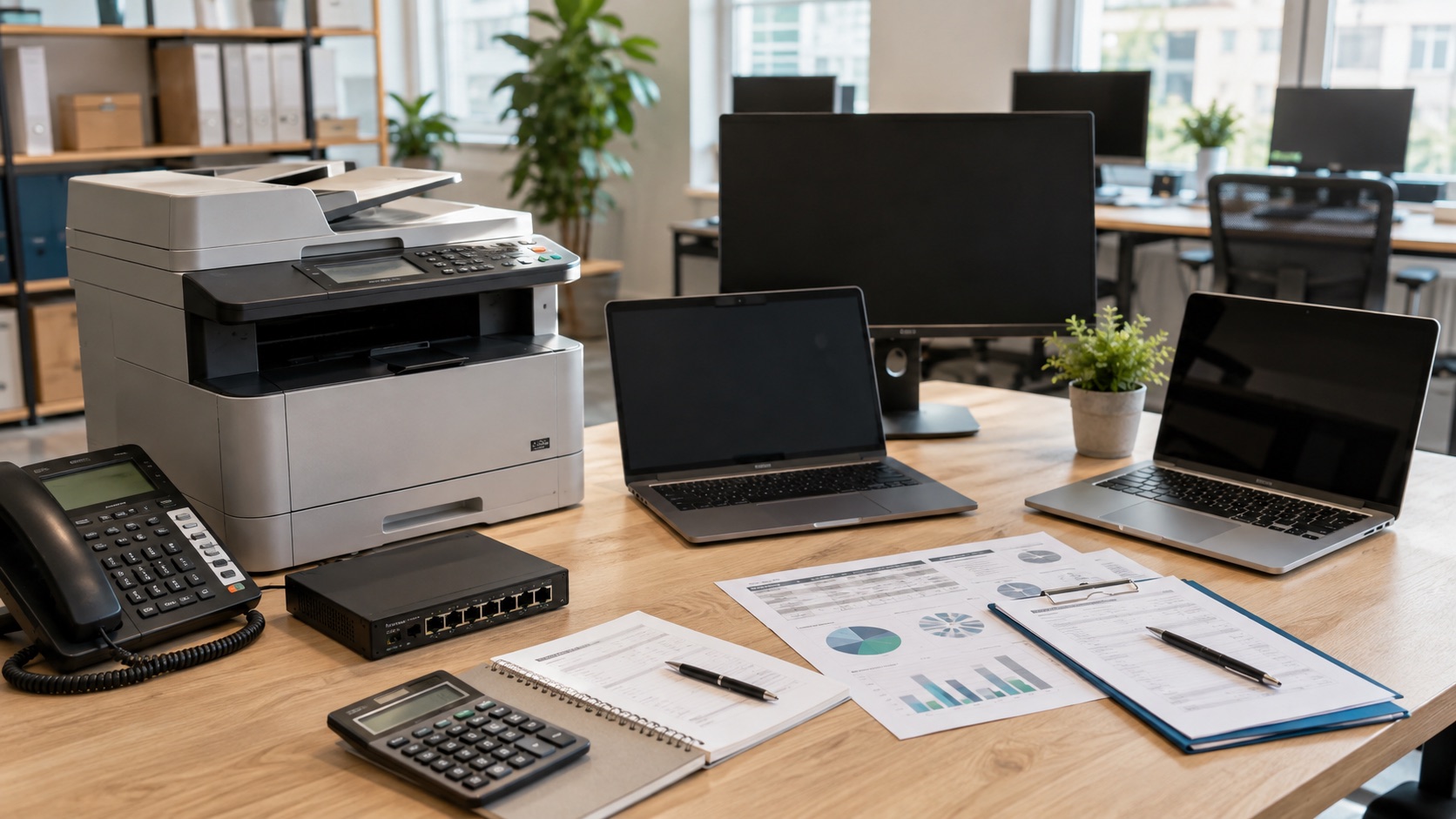
The best office equipment financing option is the one that fits the exact mix of assets, vendor timing, useful life, cash-flow target and ownership goal. A law firm replacing copiers, a clinic opening a front office, a call center buying phones and workstations, an agency furnishing a new suite and a warehouse adding office IT should not all use the same structure. Start by comparing seven routes: an equipment finance company, bank or credit union, dealer or vendor program, office technology leasing company, SBA-backed lender, marketplace or broker, and a broader business loan when the project includes many non-equipment costs.
Office equipment can look smaller than trucks, restaurant equipment or construction machines, but the decision still affects daily operations. Copiers, printers, laptops, monitors, phone systems, servers, networking hardware, security equipment, desks and chairs can all carry different useful lives. Some are physical collateral. Some are installed with labor. Some include software subscriptions or managed services. The right financing review separates those pieces before comparing payment offers.
What current results cover
Current U.S. results for office equipment financing mix broad equipment-financing comparisons with lender pages focused on office products, copiers, IT hardware and leasing. General comparison pages from finance publishers emphasize lender tables, qualification notes, financing-versus-leasing explanations, application documents and FAQs. LendingTree's current equipment-financing guide explains equipment loans, leasing and rental as distinct ways to acquire business equipment, and it highlights borrower qualifications, documents and cost factors.
The office-specific pages show the asset range more clearly. U.S. Bank's equipment financing page lists office furniture, phone systems and IT hardware or software among financeable business-critical equipment, while First Citizens Bank's office-imaging page focuses on copiers, printers, scanners, computers, phones, data storage and networking equipment. The gap is practical comparison: many pages promote one lender program, while broad listicles do not spend much time on soft costs, subscriptions and mixed office packages.
Official sources add important boundaries. The SBA 7(a) program page says approved uses can include machinery and equipment as well as furniture, fixtures and supplies, but SBA-backed financing comes through lenders and remains subject to eligibility and credit review. For tax treatment, IRS Publication 946 explains depreciation rules for business property such as furniture, equipment and certain software. A business should still ask its tax professional how a specific loan, lease or software contract is treated.
Best office equipment financing options
| Option | Best fit | What to check before signing |
|---|---|---|
| Equipment finance company | Defined office packages with furniture, copiers, computers, phones, network gear or mixed vendors. | Eligible assets, seller rules, soft costs, payment frequency, fees, lien language, ownership outcome and payoff terms. |
| Bank or credit union | Established businesses with organized financials, bank history and time for conventional underwriting. | Application-only limits, down payment, collateral scope, required documents, funding timeline and whether software is eligible. |
| Dealer or vendor program | Copiers, printers, phone systems, workstations or furniture bought from a vendor that offers financing. | Cash price versus financed price, service contract, maintenance, supplies, upgrade language and end-of-term obligations. |
| Office technology lease | Fast-changing IT, copiers, phone systems, conferencing tools or equipment expected to be refreshed. | Buyout option, return rules, automatic renewal, maintenance duties, insurance, usage limits and total cost. |
| SBA-backed lender | Larger planned office investments tied to opening, expansion, relocation or broader business purposes. | Eligibility, timeline, borrower contribution, collateral, use of proceeds, lender requirements and closing costs. |
| Marketplace or broker | Owners comparing several lender types, newer businesses or mixed-credit files. | Final lender identity, product type, payment cadence, broker compensation, hard-credit timing and total repayment. |
| Business loan or line of credit | Projects with non-equipment costs such as deposits, permits, cabling, labor, software, moving or working capital. | Use-of-funds flexibility, collateral, personal guarantee, draw rules, interest cost, repayment term and whether it should be combined with equipment financing. |
1. Equipment finance company
An equipment finance company can be the most practical route when the purchase is tied to a clear asset package. This can include office furniture, printers, copiers, computers, monitors, workstations, phone systems, conferencing equipment, servers, network switches, access-control hardware and business machines. The lender can review the quote, seller, equipment description, useful life and business reason for the purchase.
This route is strongest when the buyer has itemized vendor quotes. If the project combines multiple vendors, create a master schedule so the financing request does not become a vague office budget. Equipments Finance is based in Garland, Texas and can be one comparison point for business owners reviewing office equipment financing alongside other commercial equipment categories. That is a factual company mention, not a promise of approval, pricing or terms.
2. Bank or credit union
A bank or credit union can fit established businesses with clean financials, steady deposits and time for a traditional review. Banks may be comfortable when the borrower already has a relationship and the request is easy to document. A professional office replacing furniture and computers, for example, may be easier to review than an urgent private-party equipment purchase.
Ask about limits before spending time on a full application. Some bank programs use faster application-only workflows up to defined transaction sizes. Others require financial statements, tax returns, debt schedules and a broader collateral review. Confirm whether the loan is limited to office equipment or whether the lender also takes a broader lien on business assets.
3. Dealer or vendor financing
Dealer or vendor financing is common in office products because many copier, printer, phone-system, furniture and IT vendors already work with finance partners. It can be convenient when the equipment quote, installation, maintenance and financing package are presented together. The vendor may also understand model numbers, supply contracts, warranties and replacement cycles.
Convenience needs scrutiny. A copier payment may include equipment, maintenance, supplies, software, overage charges or service terms. Furniture financing may exclude freight or installation. IT quotes may blend hardware, software and managed services. Ask for the cash price, financed price, itemized costs, service term, automatic renewal language, upgrade options and end-of-term obligations.
4. Office technology lease
Leasing can make sense when the assets are likely to refresh before they wear out physically. Copiers, printers, phones, conferencing devices and some IT hardware may have technology cycles that are shorter than durable furniture. A lease can reduce initial cash use and preserve flexibility, but only if the end-of-term language is clear.
Read whether the business can purchase the equipment, renew, return it or upgrade at the end. Look for return conditions, notice windows, maintenance responsibility, insurance requirements and automatic extensions. For a deeper ownership framework, compare this option with equipment loan vs equipment lease before signing.
5. SBA-backed lender
SBA-backed financing belongs in the shortlist when office equipment is part of a planned expansion, relocation, startup opening or broader fixed-asset project. It can be useful when the business needs to combine equipment with other eligible costs and can support more documentation. It is usually less useful for urgent replacement purchases where the vendor needs an immediate answer.
Because SBA loans are delivered through lenders, the practical review still depends on the participating lender, borrower qualifications, eligible use of proceeds, collateral and repayment ability. Start early if the office opening date is fixed. Do not assume an SBA path can move as quickly as a simple equipment finance agreement.
6. Marketplace or broker
A marketplace or broker can help owners compare several lender types from one request. This may be useful for newer businesses, mixed-credit files, uncertain collateral, multi-vendor office packages or borrowers who do not know whether a bank, lease, equipment finance company or business loan is the right fit. The value is comparison, not certainty.
After receiving options, identify the final lender and product type. Confirm whether the offer is an equipment finance agreement, lease, term loan, line of credit, cash-flow product or merchant-cash product. Compare payment frequency, total repayment, fees, prepayment rules and whether the quoted payment includes every asset and soft cost the business expects.
7. Business loan or line of credit
A general business loan or line of credit may be better when the project includes many costs that are not clean office collateral. Examples include lease deposits, moving costs, permits, electrical work, data cabling, build-out labor, professional fees, payroll during a relocation, software subscriptions or working capital after opening. Financing the furniture while ignoring those costs can leave a funding gap.
This is where the decision overlaps with office fit-out financing. A fit-out article focuses on project budgeting; this comparison focuses on finance paths. In some cases, a business uses equipment financing for identifiable assets and a separate working-capital product for non-equipment costs. Keep the sources and uses clear so debt does not become a substitute for a real budget.
How to match the structure to your office package
Start by grouping the assets by useful life. Durable furniture may last longer than laptops. Copiers and printers may depend on usage volume and service contracts. Phones and conference-room systems can become outdated when software platforms change. Network equipment may need security updates and planned replacement. Matching every item to one long payment schedule can make a low monthly number look attractive while creating technology debt later.
Next, separate hard assets from soft costs. Hard assets can be described, invoiced and often identified as collateral. Soft costs may include freight, installation, setup, training, warranty, cabling and taxes. Some lenders allow related costs when they are tied closely to the equipment. Others finance only the equipment value. Ask this before paying deposits or assuming the approved amount will cover the whole project.
Then consider cash-flow timing. A new office may need furniture and IT before the revenue benefit arrives. A replacement copier might start helping immediately. A phone system or network upgrade may reduce downtime rather than create new sales. Compare the payment schedule to the practical benefit. A lender-ready request should explain whether the purchase supports expansion, productivity, client service, compliance, security or replacement of failing equipment.
Finally, compare written offers side by side. Include amount financed, cash required at closing, term, payment frequency, fees, collateral, personal guarantee, early payoff, renewal language, end-of-term ownership and total repayment. For a broader underwriting checklist, read what lenders look for in equipment deals.
Documents to prepare before applying
Prepare itemized vendor quotes with model numbers, quantities, unit costs, taxes, freight, installation and expected delivery dates. Add vendor contact information, quote expiration dates and whether any services are bundled into the equipment price. If multiple vendors are involved, create one summary that shows the full office package and flags which lines are hardware, furniture, installation, software, support or recurring expense.
Business documents vary by lender and transaction size. Be ready for ownership details, tax ID, time in business, annual revenue, bank statements, financial statements, tax returns, existing debt and a short explanation of how the office equipment supports operations. If the project is tied to a lease signing, expansion, new location or hiring plan, include that context. A clear file gives the lender a business case, not only a shopping list.
Do not forget operating costs after purchase. The business may still need cash for rent, payroll, internet, managed IT, software subscriptions, printer supplies, maintenance, insurance and unexpected installation issues. A financing structure that preserves working capital can help, but only if the total debt fits normal operations.
FAQ
What is the best office equipment financing option?
The best option depends on the assets, vendor, business history, cash flow, useful life and ownership goal. Most businesses should compare equipment financing, bank financing, vendor programs, leasing and broader business financing before signing.
Can office furniture, computers and printers be financed together?
They may be when the lender accepts the full package and the documentation is itemized. The more clearly each asset, cost and vendor is described, the easier it is to compare financing structures.
Is leasing better than financing office equipment?
Leasing may fit equipment with faster replacement cycles or lower initial cash needs. Financing may fit assets the business wants to own for years. Compare end-of-term language, total cost and useful life rather than choosing by monthly payment alone.
Can software be included with office equipment?
Sometimes, especially when software is part of a hardware or implementation package. Recurring subscriptions are often treated differently from physical collateral, so confirm lender and accounting treatment before relying on financing.
What should I gather before applying?
Gather itemized quotes, vendor information, equipment descriptions, model numbers, quantities, delivery timing, installation details, desired down payment, business ownership information and financial documents requested by the lender.